







| Test Your Human Resources Knowledge | ||
|
| Labor Law Journal Submissions | ||
|
| Labor Arbitrators' Awards and Biographies | ||

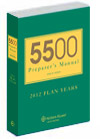
5500 Preparer's Manual for 2012 Plan Years
The premier resource in the field of Form 5500 preparation, 5500 Preparer's Manual will help you handle the required annual Form 5500 filings for both pension benefits and welfare benefit plans.
A deceased participant's second wife was not entitled to claim pension plan benefits as a contingent annuitant when evidence demonstrated that the plan made all required disclosures to her husband before he made the election to receive his pension distribution as a straight life annuity, the U.S. Court of Appeals in New York City (CA-2) has ruled in Hall v. Kodak Retirement Income Plan.
Benefits claim
For married participants, a qualified joint and survivor annuity was the normal method for paying benefits. A married participant could also elect to either (1) receive a straight life annuity (assuming he had a valid spousal waiver) or (2) receive Contingent Annuitant Annuity benefits.
When he retired in 1992 a participant, armed with a valid waiver from his then-wife, elected a straight-life annuity. After divorcing his wife, he remarried in 1994 but continued to receive benefits as a straight-life annuity until his death in 2006. The plan subsequently denied the second wife's bid to receive a survivor's annuity.
The court affirmed the lower court's grant of summary judgment to the plan regarding the wife's claim for benefits. The participant had ample notice both before and after his retirement in 1992 of his ability to designate his second wife as a contingent annuitant. A "Fact Sheet" distributed to the participant explained the optional joint and survivor annuity which would have allowed such a designation. At a meeting with a plan benefits counselor at the time of his retirement, the participant acknowledged receipt of the Fact Sheet. In addition, both the Fact Sheet and plan SPDs received by the participant in the years after his retirement provided information on the process that could be followed if the participant had decided to change his annuity election.
Fiduciary duty claim
Similarly, the court concluded that the wife's fiduciary breach claim had been appropriately dismissed. A claim for breach of fiduciary duty under ERISA §502(a)(3) must seek appropriate equitable relief. To the extent the wife's claim is that the plan's alleged notice failures entitle her to an annuity interest in the plan, such a remedy is legal in nature and therefore not available under ERISA §502(a)(3).
Hall v. Kodak Retirement Income Plan
For more information on this and related topics, consult the CCH Pension Plan Guide, CCH Employee Benefits Management, and Spencer's Benefits Reports.
Visit our News Library to read more news stories.
 ©2005-2025 CCH Incorporated or its affiliates
